
BLOGS
BY solance
What Is BESS? Why Battery Energy Storage Systems Are Important for India’s Solar Future
16 May
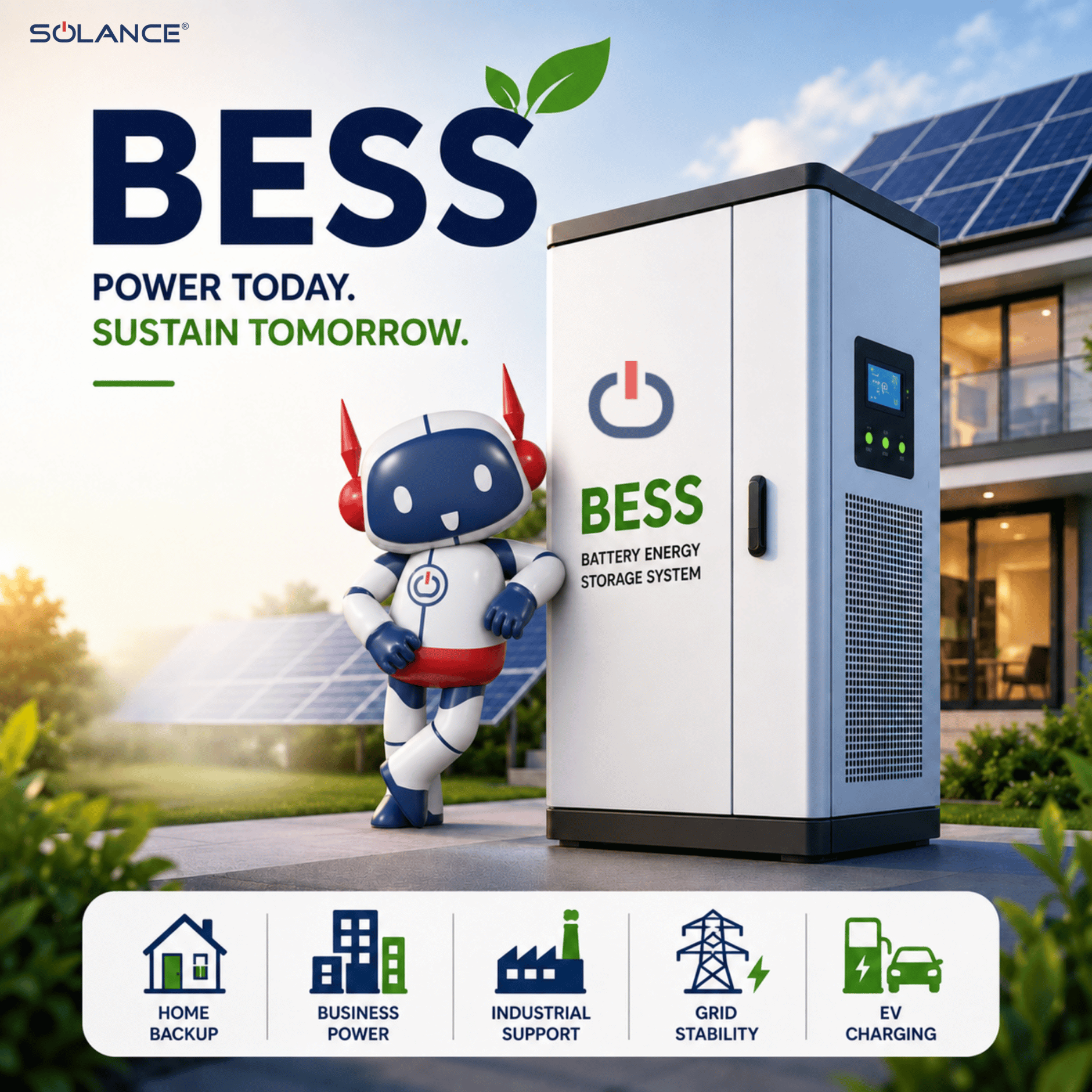
As India moves rapidly toward solar power, electric mobility, and reliable backup energy, one term is becoming very important in the power industry: BESS.
BESS stands for Battery Energy Storage System. In simple words, it is a system that stores electricity in batteries and supplies it when required. It helps users store solar energy, manage power cuts, reduce peak electricity demand, and improve energy reliability.
For homes, businesses, industries, solar projects, and electric vehicle infrastructure, BESS is becoming a key part of the future energy ecosystem.
What Is BESS?
A Battery Energy Storage System is an advanced power storage setup that charges batteries when electricity is available and discharges power when electricity is needed.
For example, during the daytime, solar panels may generate more electricity than a home or business uses. Instead of wasting that extra energy, a BESS can store it in batteries. Later, the stored energy can be used at night, during power cuts, or when electricity demand is high.
A BESS is not just a battery. It is a complete system that includes batteries, control electronics, safety devices, and monitoring technology.
Main Components of a BESS
A typical Battery Energy Storage System includes:
- Battery Bank
This stores electrical energy. Depending on the application, batteries may be lithium-ion, lead-acid, advanced lead-carbon, or other battery technologies. - Battery Management System
The Battery Management System, commonly called BMS, monitors battery health, voltage, temperature, charging, and discharging. It helps protect the battery and improve performance. - Inverter or Power Conversion System
Batteries store DC power, while most homes and businesses use AC power. The inverter or PCS converts power between DC and AC. - Energy Management System
This software controls when the battery should charge and discharge. It helps optimize energy usage. - Protection and Safety System
BESS installations require protection against overcharging, overheating, short circuits, and electrical faults. - Monitoring System
Many modern systems include digital monitoring so users can track power generation, battery status, and energy consumption.
Why BESS Is Important in India
India is adding more solar and wind power every year. Solar energy is clean and cost-effective, but it is also variable. Solar panels generate electricity during the day, but demand often increases in the evening.
This is where BESS becomes important. Battery storage helps balance supply and demand by storing energy when generation is high and releasing it when required.
The Government of India is also supporting energy storage because renewable energy needs strong backup and grid support. According to the Ministry of Power, India is promoting BESS through policy, regulatory, demand-side, and supply-side measures to support the country’s clean energy transition.
Benefits of Battery Energy Storage Systems
- Better Use of Solar Power
Without battery storage, solar power can only be used when sunlight is available. With BESS, extra solar energy can be stored and used later.
This makes solar systems more practical for homes, offices, factories, schools, hospitals, and commercial buildings.
- Backup During Power Cuts
BESS can provide backup power when the grid fails. This is useful for homes, shops, offices, telecom sites, hospitals, and small industries where uninterrupted power is important.
- Lower Electricity Costs
In some applications, battery storage can help users reduce electricity costs by storing energy during low-demand periods and using it during peak-demand hours.
- Support for the Electricity Grid
At a larger scale, BESS helps stabilize the grid. It can respond quickly when demand rises or renewable generation drops.
- Cleaner Energy Usage
When paired with solar power, BESS helps reduce dependence on diesel generators and conventional power sources.
BESS for Homes and Rooftop Solar
Rooftop solar is growing strongly in India. Government schemes such as rooftop solar programs and PM Surya Ghar are encouraging more households to adopt solar energy.
For residential users, battery storage can make rooftop solar more useful by allowing stored energy to be used after sunset or during power cuts.
A home solar-plus-battery system can support:
- Lights and fans
- Wi-Fi and mobile charging
- Refrigerators
- Basic home appliances
- Emergency backup loads
For many Indian households, this combination of solar panels, inverter, and battery backup can improve energy independence.
BESS for Businesses and Industries
For businesses, power interruption can directly affect productivity and revenue. Offices, retail stores, factories, hospitals, data centers, and educational institutions need reliable backup power.
A BESS can help businesses:
- Prevent downtime
- Protect sensitive equipment
- Reduce dependence on diesel backup
- Use solar power more effectively
- Manage peak electricity demand
UPS batteries and inverter batteries already play an important role in commercial backup systems. As energy storage technology grows, businesses will increasingly look for smarter and more efficient battery-based power solutions.
Difference Between BESS, Inverter Battery, and UPS Battery
Many people confuse BESS with inverter batteries or UPS batteries. They are related, but not exactly the same.
An inverter battery is usually used for home or office backup during power cuts.
A UPS battery provides instant backup for computers, servers, medical equipment, and sensitive electronics.
A BESS is a larger and more integrated system that can include batteries, inverter, BMS, energy management software, safety devices, and monitoring.
In simple terms, inverter batteries and UPS batteries are important parts of backup power systems, while BESS is a complete energy storage solution.
Future of BESS in India
The future of BESS in India looks strong because of three major trends:
- Rapid growth in solar power
- Rising demand for uninterrupted electricity
- Increasing need for grid stability
The Central Electricity Authority has estimated a major requirement for battery storage capacity in the coming years as renewable energy grows. Industry reports also suggest that India’s energy storage market is moving from planning and tendering toward real project execution.
This means battery storage will become more visible across homes, commercial buildings, solar plants, EV charging stations, and industrial facilities.
Choosing the Right Battery Solution
Whether it is for inverter backup, UPS backup, solar storage, automotive use, or e-vehicle application, choosing the right battery is important.
Customers should consider:
- Application type
- Required backup time
- Battery capacity
- Safety standards
- Maintenance requirement
- Warranty and service support
- Brand reliability
A good battery should offer stable performance, long life, and dependable backup.
Solance: Powering Reliable Energy Solutions
Solance provides reliable battery solutions for automotive, two-wheeler, inverter, UPS, solar, and e-vehicle applications.
As India moves toward solar energy and smarter battery storage, dependable batteries will continue to play a major role in homes, vehicles, businesses, and industries.
From everyday backup power to future-ready energy storage, batteries are at the heart of India’s clean energy journey.
Conclusion
BESS, or Battery Energy Storage System, is one of the most important technologies shaping the future of power in India.
It helps store solar energy, provide backup power, reduce grid pressure, and support cleaner electricity usage. As India expands renewable energy and rooftop solar, BESS will become increasingly important for reliable and efficient power management.
For customers, the message is simple: the future of energy is not only about generating power. It is also about storing it smartly.
